In international logistics, reducing costs is important — but choosing the lowest price is not always the most effective strategy.
Many businesses focus heavily on finding the cheapest freight rates without fully considering service quality, operational stability, transit reliability, and hidden risks that may impact the entire supply chain.
In reality, logistics cost optimization is about balancing cost, efficiency, reliability, and long-term operational performance.
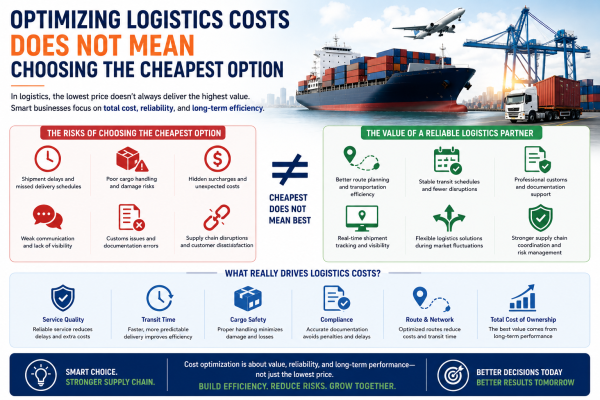
Choosing a low-cost logistics solution without proper evaluation can lead to:
• Shipment delays and missed delivery schedules
• Poor cargo handling and increased damage risks
• Hidden surcharges and unexpected operational costs
• Weak communication and lack of shipment visibility
• Customs clearance issues and documentation errors
• Supply chain disruptions and customer dissatisfaction
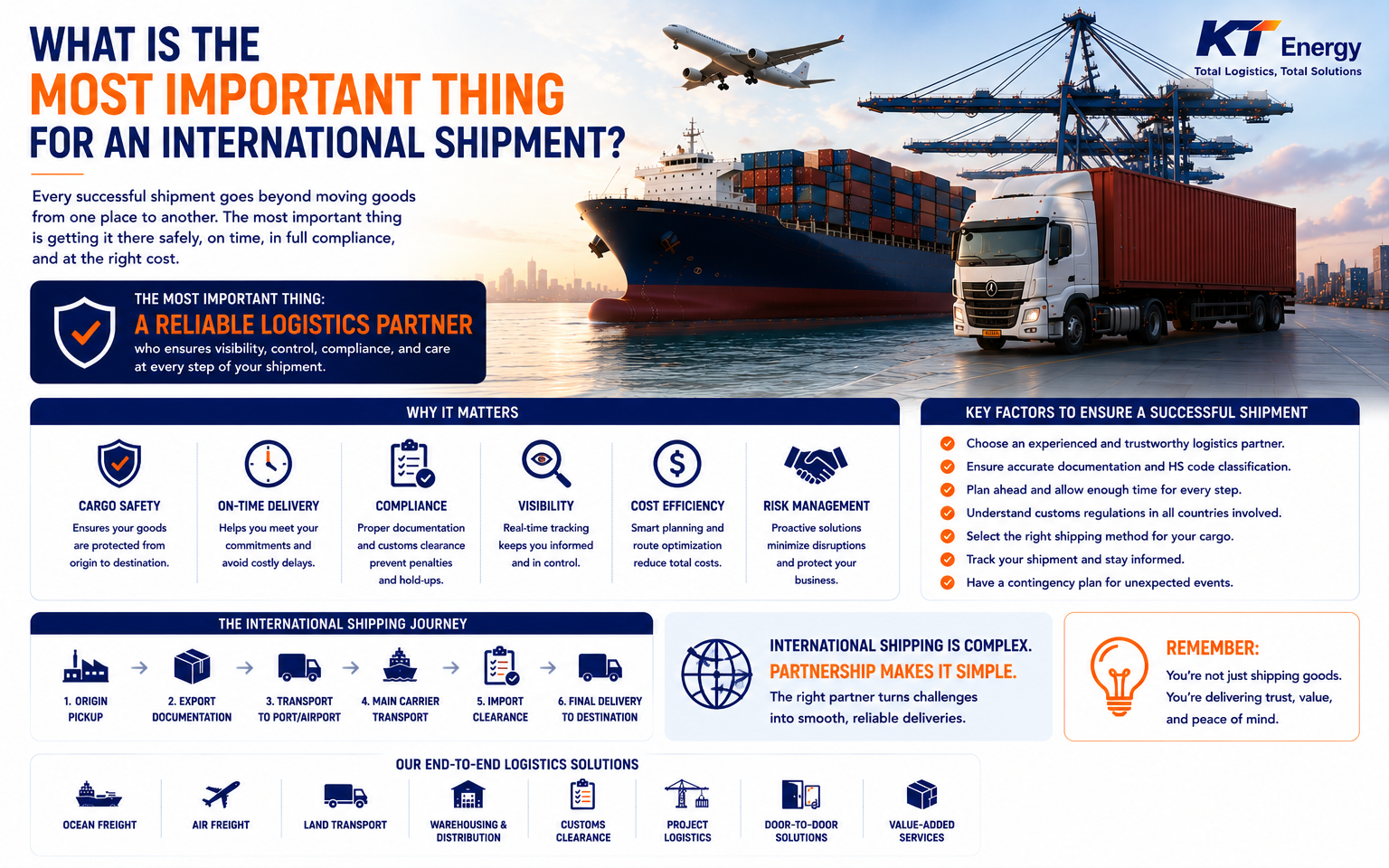
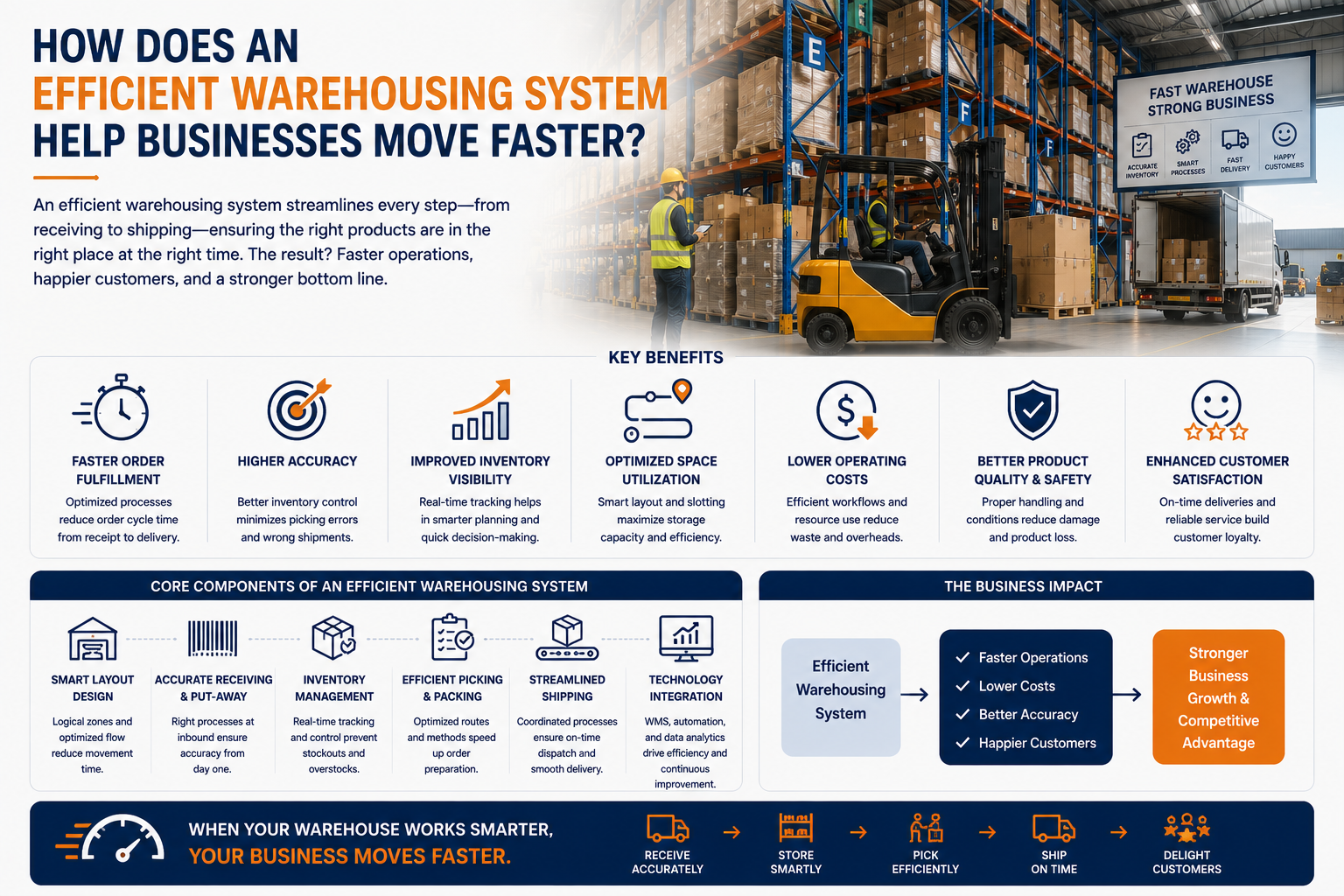
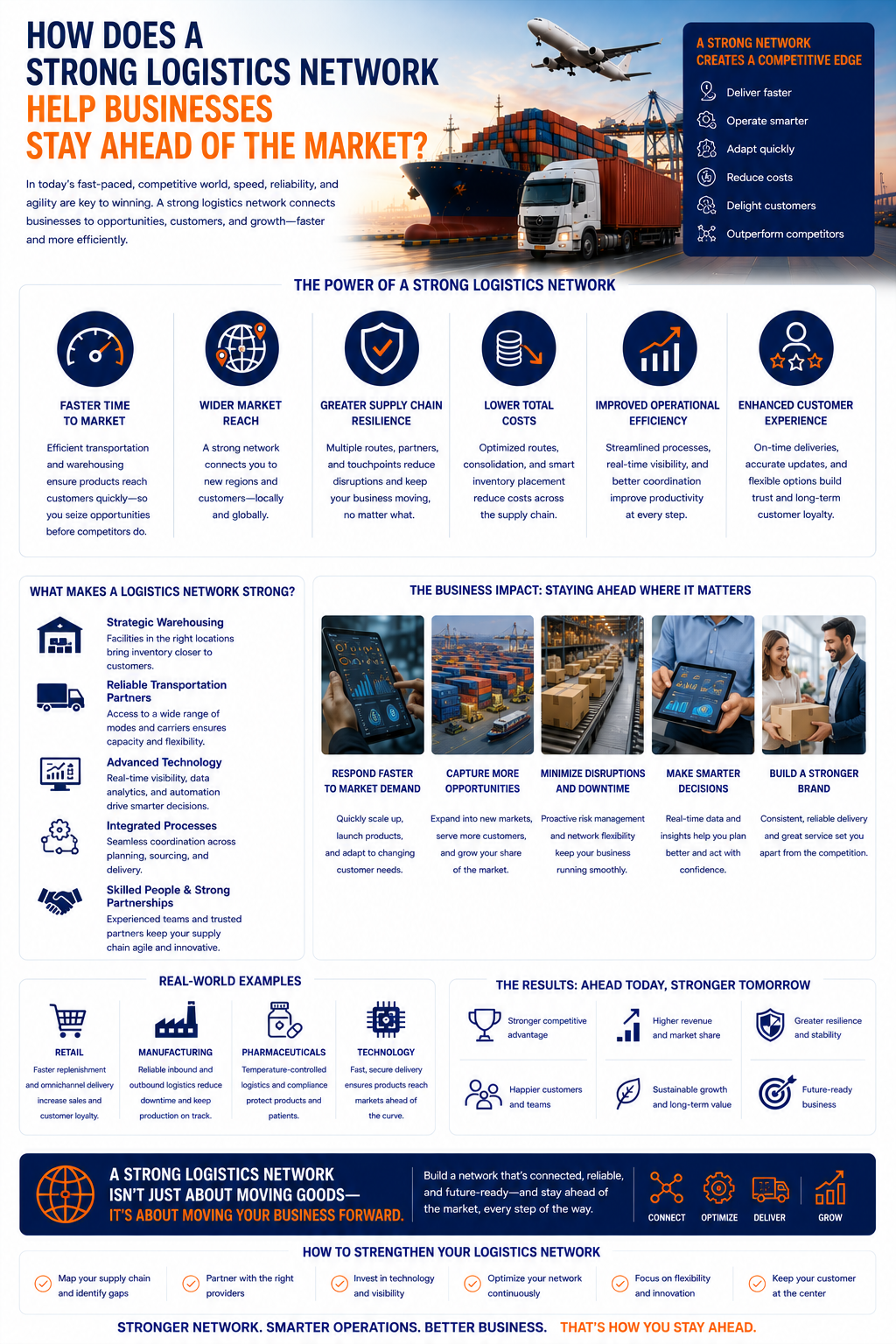
On the other hand, a reliable logistics partner may help businesses reduce total operational costs through:
• Better route planning and transportation efficiency
• Stable transit schedules and fewer disruptions
• Professional customs and documentation support
• Real-time shipment tracking and transparency
• Flexible logistics solutions during market fluctuations
• Stronger supply chain coordination and risk management
For industries such as industrial materials, commodities, energy, and bulk cargo, operational reliability and logistics stability often have a greater long-term impact than simply securing the cheapest freight rate.
Today, businesses are increasingly prioritizing value, service quality, and supply chain resilience rather than focusing only on short-term transportation costs.
In a rapidly changing global market, smart logistics decisions are not about paying the least — they are about creating the most efficient and sustainable supply chain for long-term growth.
#KTEnergyGlobal #Logistics #SupplyChain #GlobalTrade #FreightSolutions #BulkCargo #MaritimeLogistics #CostOptimization #InternationalLogistics