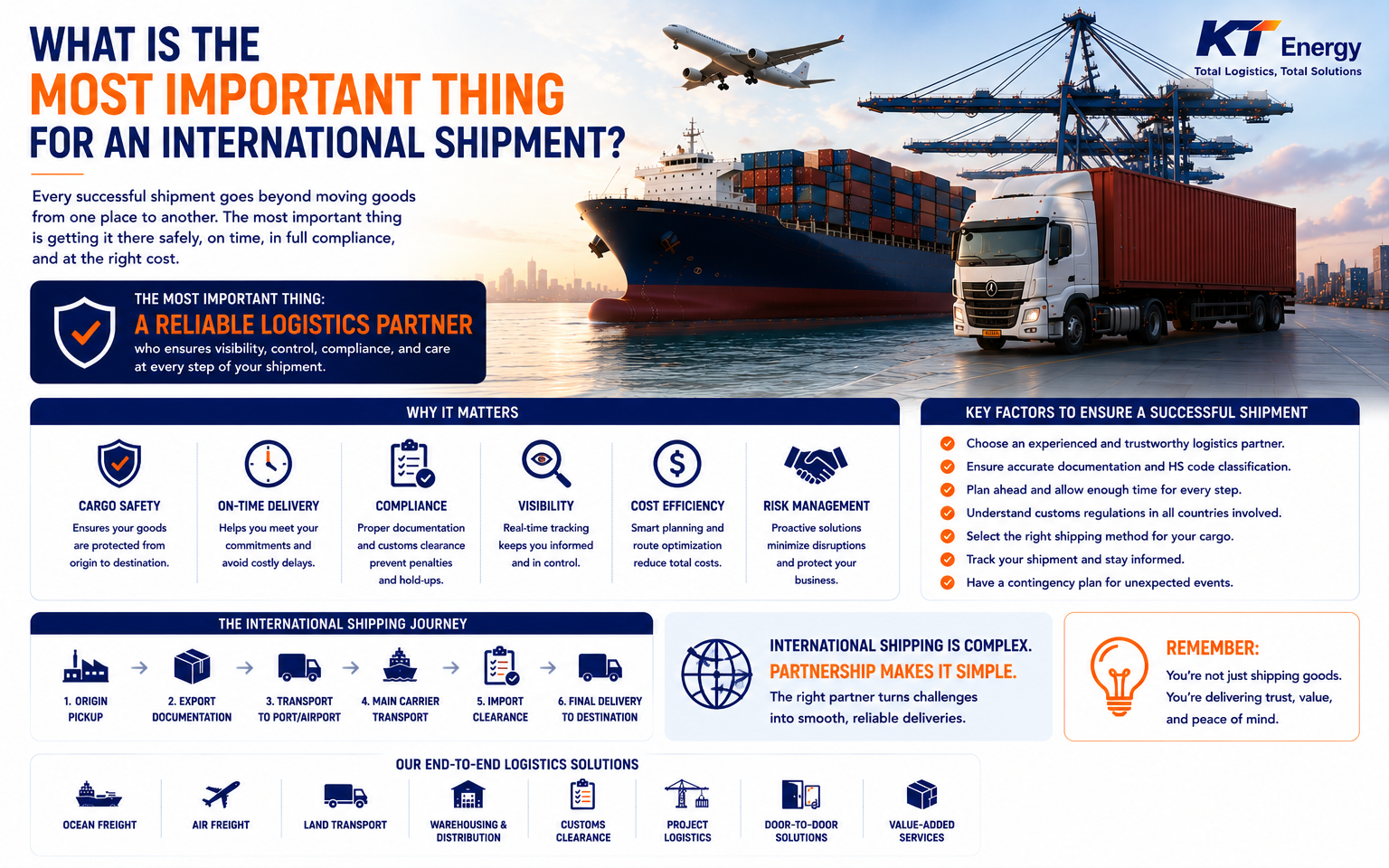
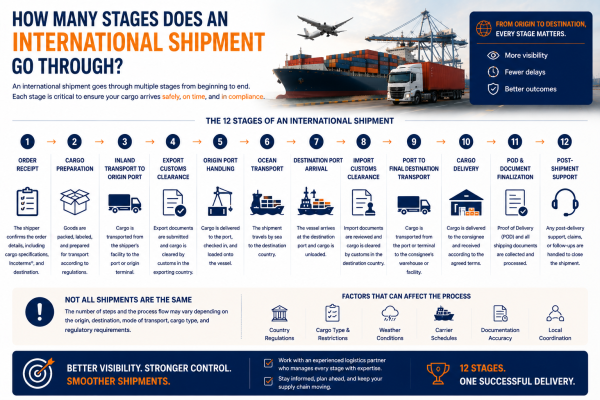
For many people, international shipping may seem as simple as moving goods from one country to another. In reality, a single shipment often passes through multiple operational stages before reaching its final destination.
Each step involves different parties, documents, transportation networks, and regulatory requirements working together to keep cargo moving efficiently.
🏭 1. Cargo Preparation
The process begins at the factory, supplier, or warehouse.
This stage includes:
• Production completion
• Packaging and labeling
• Cargo inspection
• Shipment planning
• Documentation preparation
Proper preparation helps prevent delays later in the supply chain.
🚛 2. Inland Transportation
Once ready, the cargo is transported to the port, airport, or logistics terminal.
This may involve:
• Trucking services
• Rail transportation
• Inland waterways
Coordination is critical to ensure cargo arrives before cut-off deadlines.
📄 3. Export Documentation
Before export, several documents must be prepared and verified, including:
• Commercial Invoice
• Packing List
• Shipping Instructions
• Certificate of Origin (if required)
• Export permits and licenses
Even small documentation errors can delay an entire shipment.
🛃 4. Export Customs Clearance
Cargo must be cleared by customs before leaving the country.
This process may include:
• Export declaration filing
• Customs inspection
• Compliance verification
• Cargo release approval
Only after clearance can the shipment proceed to international transportation.
⚓ 5. Port or Terminal Handling
At the port or terminal, cargo undergoes:
• Container gate-in procedures
• Cargo handling operations
• Security checks
• Vessel or aircraft loading
This stage connects domestic logistics with international transportation.
🚢 6. International Transportation
The shipment begins its journey via:
• Ocean freight
• Air freight
• Rail freight
• Multimodal transportation
Depending on the route, cargo may pass through several countries and transshipment hubs before arriving at its destination.
🛃 7. Import Customs Clearance
Upon arrival, cargo must complete import procedures.
This may involve:
• Customs inspections
• Duty and tax payments
• Documentation verification
• Regulatory compliance checks
Only after clearance can the shipment be released for delivery.
🚚 8. Final Delivery
The final stage involves transporting cargo to:
• Warehouses
• Distribution centers
• Retail facilities
• End customers
This is where the shipment officially completes its journey.
🌐 One Shipment, Many Participants
A typical international shipment may involve:
✔ Suppliers and manufacturers
✔ Trucking companies
✔ Warehouses
✔ Freight forwarders
✔ Shipping lines or airlines
✔ Port operators
✔ Customs authorities
✔ Consignees
Every stage must be coordinated carefully to avoid delays and unnecessary costs.
🚀 Logistics Is a Chain of Connected Activities
Although customers often see only the departure and arrival of a shipment, international logistics is a process made up of many interconnected steps.
The success of a shipment depends not on a single transportation movement, but on how effectively each stage is planned, coordinated, and executed.
Because in global trade, every successful delivery is the result of multiple logistics activities working together seamlessly from origin to destination.
#KTEnergyGlobal #Logistics #SupplyChain #InternationalShipping #GlobalTrade #FreightForwarding #MaritimeLogistics #ImportExport #OceanFreight #SupplyChainManagement