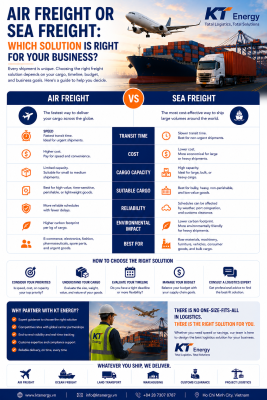
Choosing the right transportation mode is one of the most important decisions in international logistics. While both air freight and sea freight play critical roles in global trade, the best option depends on factors such as cargo type, delivery timeline, budget, and supply chain requirements.
Understanding the strengths and limitations of each solution can help businesses optimize costs, improve efficiency, and maintain reliable operations.
✈️ Air Freight: Speed & Flexibility
Air freight is often the preferred choice for shipments that require fast delivery and high reliability.
Advantages:
• Short transit times
• Faster response to urgent demand
• High schedule reliability
• Reduced inventory holding costs
• Ideal for high-value or time-sensitive cargo
Best suited for:
• Electronics and technology products
• Medical supplies and pharmaceuticals
• Urgent spare parts
• High-value goods
• Seasonal or promotional products
Considerations:
• Higher transportation costs
• Limited cargo size and weight capacity compared to ocean shipping
🚢 Sea Freight: Cost Efficiency & Large Capacity
Sea freight remains the backbone of global trade, handling the majority of international cargo movement worldwide.
Advantages:
• Lower transportation costs for large shipments
• Suitable for heavy and oversized cargo
• High container capacity
• Cost-effective for long-distance trade routes
• Supports bulk cargo and industrial materials
Best suited for:
• Industrial materials
• Commodities and raw materials
• Machinery and equipment
• Bulk cargo shipments
• Large-volume import-export operations
Considerations:
• Longer transit times
• Potential delays due to port congestion or weather conditions
📦 How to Choose the Right Option?
Businesses should consider:
• Delivery urgency
• Cargo value
• Shipment size and weight
• Transportation budget
• Inventory strategy
• Customer expectations
In many cases, companies combine both air and sea freight as part of a multimodal logistics strategy to balance speed and cost efficiency.
🌍 The Right Choice Depends on Your Business Goals
There is no one-size-fits-all solution in international logistics. The most effective transportation strategy is the one that aligns with your operational needs, delivery commitments, and long-term supply chain objectives.
Businesses that evaluate both cost and performance can make smarter logistics decisions and build more resilient global supply chains.
#KTEnergyGlobal #AirFreight #SeaFreight #Logistics #SupplyChain #GlobalTrade #FreightForwarding #InternationalLogistics #FreightSolutions #MaritimeLogistics