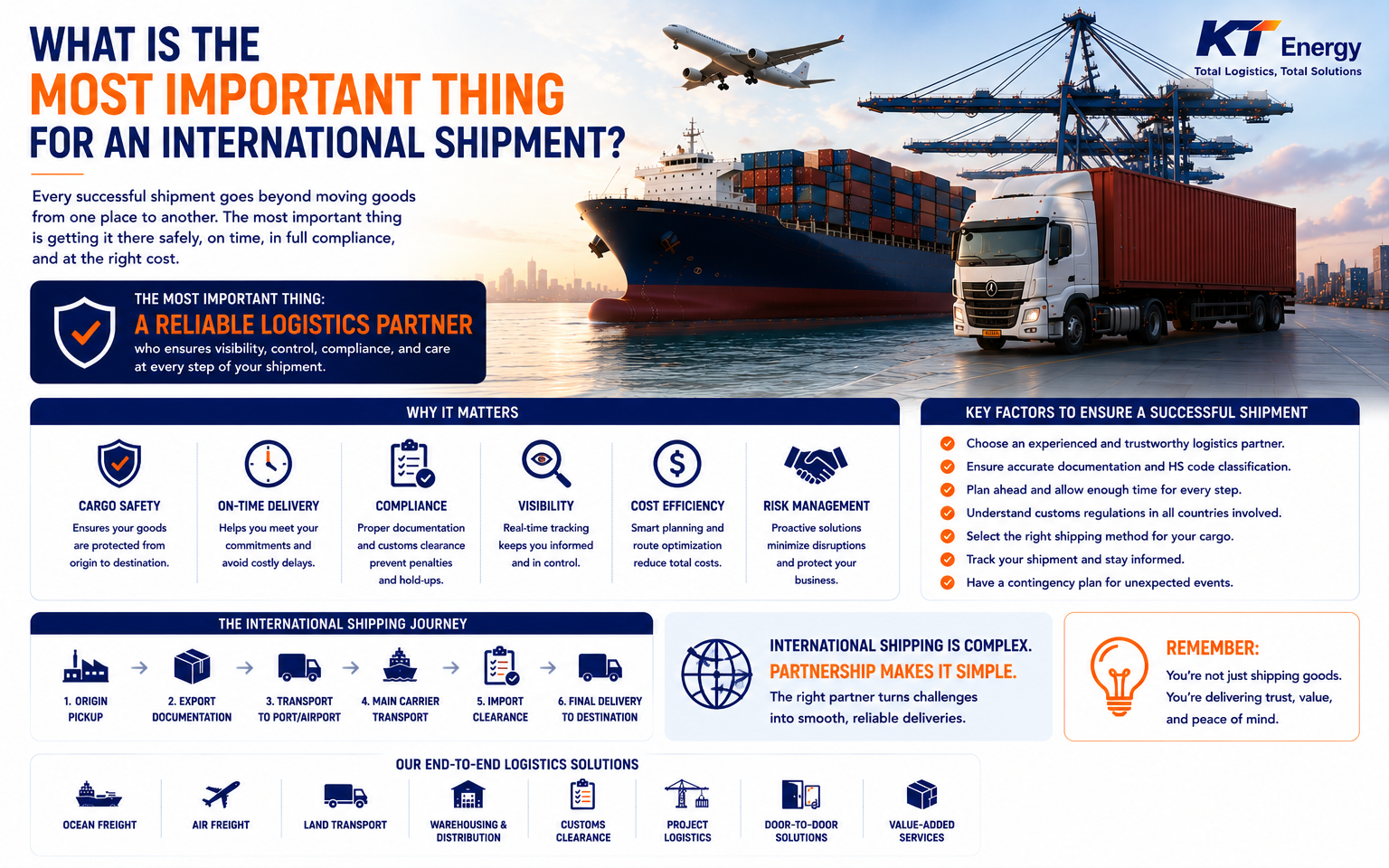
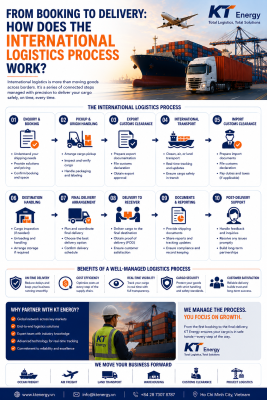
International logistics involves much more than simply moving cargo from one country to another. Behind every successful shipment is a carefully coordinated process that connects shippers, freight forwarders, carriers, ports, customs authorities, warehouses, and final customers.
Understanding the logistics journey from booking to delivery helps businesses improve planning, reduce risks, and optimize supply chain performance.
1️⃣ Booking Confirmation
The process begins when the shipper confirms cargo details and books transportation with a freight forwarder or carrier.
Key information includes:
• Cargo type and volume
• Origin and destination
• Shipping schedule requirements
• Transportation mode (ocean, air, rail, or multimodal)
Early booking helps secure space availability and better freight rates.
2️⃣ Cargo Preparation
Before shipment, goods are packed, labeled, inspected, and prepared according to international transportation requirements.
This stage includes:
• Packaging and palletization
• Cargo inspection
• Export documentation preparation
• Shipping instructions
Proper preparation helps prevent delays and cargo damage.
3️⃣ Inland Transportation
Cargo is collected from the warehouse or factory and transported to the port, airport, or logistics terminal.
This step requires:
• Trucking coordination
• Scheduling management
• Cargo tracking and visibility
Efficient inland transportation is essential for maintaining shipment timelines.
4️⃣ Export Customs Clearance
Before leaving the country, cargo must pass export customs procedures.
Required documents may include:
• Commercial Invoice
• Packing List
• Certificate of Origin
• Export Declaration
• Other regulatory documents
Accurate documentation helps avoid clearance delays.
5️⃣ International Transportation
Once cleared, cargo is loaded onto the vessel, aircraft, or other transportation mode and begins its international journey.
During this phase:
• Shipment tracking becomes critical
• Carriers manage transportation schedules
• Logistics teams monitor cargo status
6️⃣ Import Customs Clearance
Upon arrival at the destination country, cargo undergoes import customs procedures before release.
This stage may involve:
• Duty and tax assessment
• Customs inspection
• Compliance verification
• Cargo release authorization
7️⃣ Final Delivery
After customs clearance, cargo is transported to the consignee, warehouse, distribution center, or final customer.
The process concludes when:
• Cargo is delivered successfully
• Delivery confirmation is completed
• Logistics documentation is finalized
🌐 Why Process Coordination Matters
A successful international shipment depends on seamless coordination across every stage—from booking and documentation to transportation and final delivery.
Businesses that work with experienced logistics partners can benefit from:
✔ Better shipment visibility
✔ Reduced delays and disruptions
✔ Improved cost control
✔ Stronger supply chain performance
✔ Greater customer satisfaction
In today’s competitive global market, efficient logistics management is not just about transportation—it is about creating a smooth and reliable supply chain from origin to destination.
#KTEnergyGlobal #Logistics #SupplyChain #GlobalTrade #FreightForwarding #InternationalLogistics #ImportExport #MaritimeLogistics #FreightSolutions #DeliveryManagement