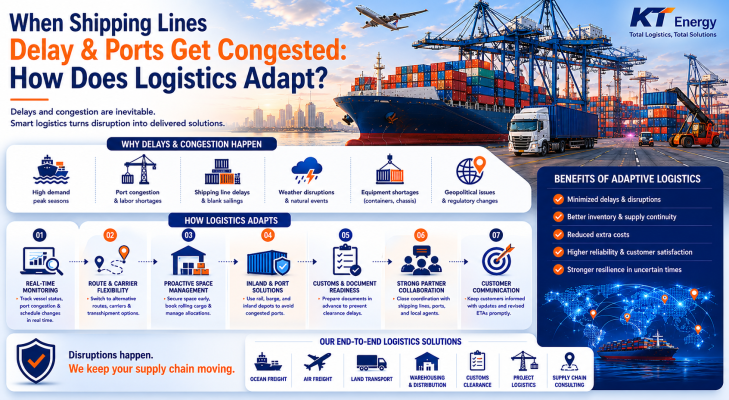
In today’s global supply chain environment, vessel delays and port congestion have become common challenges that can significantly impact cargo movement, delivery schedules, and operational costs.
Whether caused by surging cargo volumes, adverse weather conditions, labor shortages, or disruptions in global trade routes, these issues can create ripple effects throughout the entire supply chain.
The key question is no longer whether disruptions will occur—but how businesses and logistics providers can respond effectively when they do.
🚢 The Impact of Vessel Delays
When shipping lines experience schedule changes or vessel delays, businesses may face:
• Longer transit times
• Missed delivery commitments
• Inventory shortages
• Production disruptions
• Increased storage and handling costs
For time-sensitive cargo, even a few days of delay can affect operational performance and customer satisfaction.
⚓ Port Congestion Creates Additional Challenges
Congested ports often result in:
• Longer container dwell times
• Delayed cargo loading and unloading
• Equipment shortages
• Increased demurrage and detention charges
• Reduced supply chain visibility
As congestion builds, the effects can spread far beyond the port itself, impacting trucking, warehousing, and inland transportation operations.
🔄 How Logistics Adapts to Disruptions
Professional logistics teams continuously adjust operations to minimize the impact of delays.
Common strategies include:
• Monitoring vessel schedules in real time
• Identifying alternative shipping routes
• Utilizing alternative ports when possible
• Adjusting transportation plans proactively
• Coordinating closely with carriers and terminals
Flexibility is often the most valuable tool during periods of disruption.
📦 Inventory & Supply Chain Planning Become Critical
Businesses can reduce the impact of delays by:
• Booking shipments earlier
• Maintaining strategic inventory levels
• Diversifying suppliers and logistics routes
• Improving demand forecasting
• Building contingency plans for unexpected disruptions
Proactive planning helps create greater resilience throughout the supply chain.
🌐 Visibility Drives Faster Decision-Making
Real-time logistics visibility allows businesses to:
• Track shipment status continuously
• Identify potential delays earlier
• Communicate more effectively with customers
• Make faster operational adjustments
In today’s logistics environment, information can be just as valuable as transportation capacity.
🚀 Resilience Is the New Competitive Advantage
Global supply chains will continue to face uncertainty, whether from market fluctuations, capacity constraints, or operational disruptions.
Companies that invest in flexible logistics networks, strong partnerships, and proactive supply chain management are better positioned to minimize risks and maintain business continuity.
Because when shipping lines delay and ports become congested, success depends not on avoiding disruption—but on how quickly and effectively businesses adapt.
#KTEnergyGlobal #Logistics #SupplyChain #PortCongestion #ShippingDelay #GlobalTrade #FreightForwarding #MaritimeLogistics #SupplyChainResilience #InternationalShipping