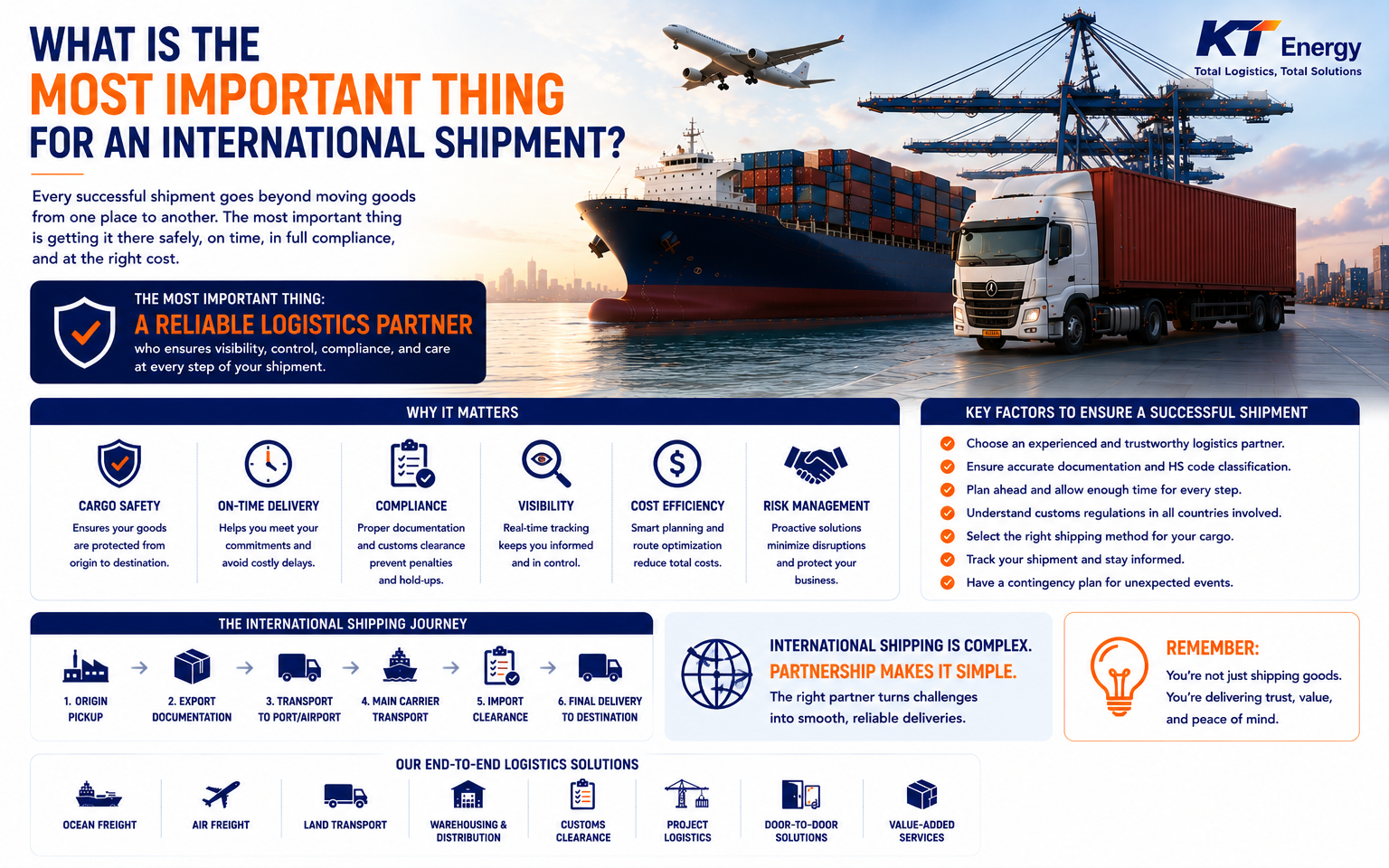
When we see a container arriving at its destination, it’s easy to assume the journey was simple. In reality, an international container shipment often passes through multiple countries, ports, transportation networks, and logistics checkpoints before reaching the final customer.
Behind every container is a highly coordinated global logistics process.
🏭 Step 1: Cargo Collection at Origin
The journey begins at the supplier’s factory, warehouse, or distribution center.
At this stage:
• Goods are packed and prepared for export
• Shipping documents are completed
• The container is loaded or scheduled for pickup
• Inland transportation is arranged
The shipment then begins moving toward the export port.
🚛 Step 2: Inland Transportation to the Port
Before reaching an international vessel, the container often travels by:
• Truck
• Rail
• Inland waterway transport
The objective is to deliver the container to the export terminal before vessel cut-off deadlines.
⚓ Step 3: Export Port Operations
Once at the port, the container goes through:
• Terminal handling procedures
• Customs clearance
• Security inspections
• Vessel loading coordination
After all requirements are completed, the container is loaded onto the vessel.
🚢 Step 4: International Ocean Transportation
This is where the global journey truly begins.
Depending on the route, a container may travel through several countries and major transshipment hubs before reaching its final destination.
Common transshipment hubs include:
• Singapore
• Port Klang (Malaysia)
• Colombo (Sri Lanka)
• Busan (South Korea)
• Rotterdam (Netherlands)
A shipment from Asia to Europe or North America may change vessels one or more times along the way.
🌐 Step 5: Transshipment & Hub Connections
Not every container travels directly from origin to destination.
At transshipment ports:
• Containers are unloaded
• Sorted and transferred
• Loaded onto another vessel
These hubs help connect global trade routes and improve shipping network efficiency.
🛃 Step 6: Import Customs Clearance
Upon arrival in the destination country, the container enters the import process.
This may include:
• Customs inspections
• Duty and tax assessments
• Documentation verification
• Cargo release procedures
Only after customs approval can the cargo continue its final journey.
🚚 Step 7: Final Delivery
The container is then transported to:
• Warehouses
• Distribution centers
• Manufacturing facilities
• End customers
Depending on the destination, final delivery may involve trucking, rail transport, or multimodal logistics solutions.
📦 One Container, Many Moving Parts
A single container shipment may involve:
✔ Multiple countries
✔ Several ports
✔ Different carriers
✔ Customs authorities
✔ Warehouses and terminals
✔ Various transportation modes
Every stage must be carefully coordinated to ensure cargo arrives safely and on schedule.
🚀 Global Trade Depends on Logistics Connectivity
Modern international trade relies on the seamless movement of containers across borders, oceans, and transportation networks.
While customers may only see the beginning and end of the journey, a container’s path often spans thousands of kilometers and multiple countries before reaching its destination.
Because in global logistics, every container tells a story of coordination, connectivity, and international trade in motion.
#KTEnergyGlobal #Logistics #ContainerShipping #GlobalTrade #SupplyChain #OceanFreight #FreightForwarding #MaritimeLogistics #InternationalShipping #SupplyChainManagement