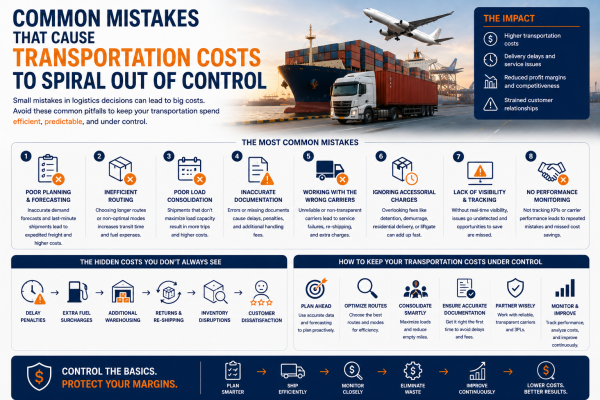
 In international logistics, rising transportation costs are not always caused by higher freight rates. In many cases, unexpected expenses result from planning mistakes, poor coordination, or inefficient supply chain management.
For businesses involved in import and export activities, avoiding these common mistakes can significantly improve cost control and operational efficiency.
⏰ Booking Too Late
One of the most frequent causes of higher logistics costs is last-minute booking.
Late bookings often lead to:
• Higher freight rates
• Limited vessel or flight availability
• Peak season surcharges
• Increased risk of cargo rollovers
Businesses that plan shipments early generally have more options and better cost control.
📄 Documentation Errors
Small mistakes in shipping documents can create major financial consequences.
Common issues include:
• Incorrect cargo information
• Missing documents
• Wrong HS codes
• Inconsistent shipment details
These errors may result in customs delays, storage charges, penalties, and additional handling costs.
🚢 Choosing Logistics Providers Based Only on Price
The cheapest option is not always the most cost-effective.
Low-cost services may lead to:
• Shipment delays
• Poor communication
• Operational disruptions
• Hidden charges
Many businesses ultimately spend more correcting problems than they initially saved on freight.
📦 Poor Inventory Planning
Weak inventory management often creates unnecessary logistics expenses.
Examples include:
• Emergency shipments by air freight
• Excess warehousing costs
• Inventory shortages
• Production interruptions
Better forecasting and inventory visibility help reduce these risks.
🚛 Lack of Coordination Between Supply Chain Stages
Warehouse operations, inland transportation, customs procedures, and international freight are all connected.
When coordination breaks down, businesses may face:
• Missed vessel cut-offs
• Additional trucking costs
• Storage fees
• Delayed deliveries
Logistics should be managed as one continuous process rather than separate activities.
🌐 Ignoring Market Trends
Freight markets can change rapidly due to:
• Capacity shortages
• Port congestion
• Seasonal demand spikes
• Geopolitical events
Businesses that fail to monitor market conditions often struggle to react before costs increase.
⚠ Not Having Backup Plans
Relying on a single route, carrier, or supplier can expose businesses to significant risk.
When disruptions occur, companies without alternatives may face:
• Expensive last-minute solutions
• Longer delays
• Increased transportation costs
Supply chain flexibility is often a key factor in cost management.
🚀 Cost Control Starts with Better Planning
The most successful businesses understand that controlling logistics costs is not simply about negotiating lower freight rates.
It requires:
✔ Early planning
✔ Accurate documentation
✔ Strong logistics coordination
✔ Supply chain visibility
✔ Reliable logistics partnerships
✔ Flexible transportation strategies
Because in international logistics, costs often become uncontrollable not because transportation is expensive—but because inefficiencies are allowed to accumulate throughout the supply chain.
#KTEnergyGlobal #Logistics #SupplyChain #CostOptimization #GlobalTrade #FreightForwarding #InternationalShipping #MaritimeLogistics #SupplyChainManagement #LogisticsStrategy