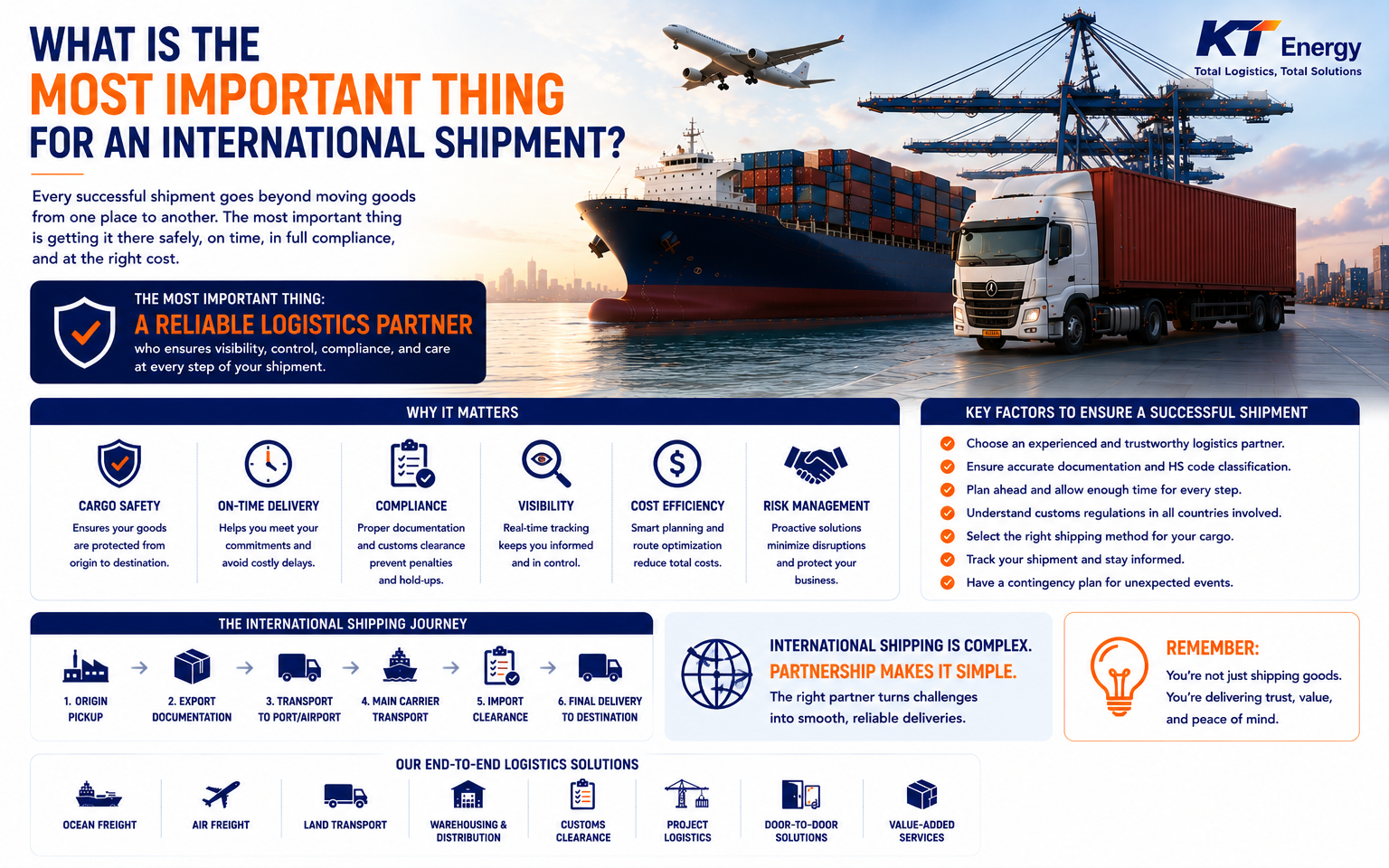
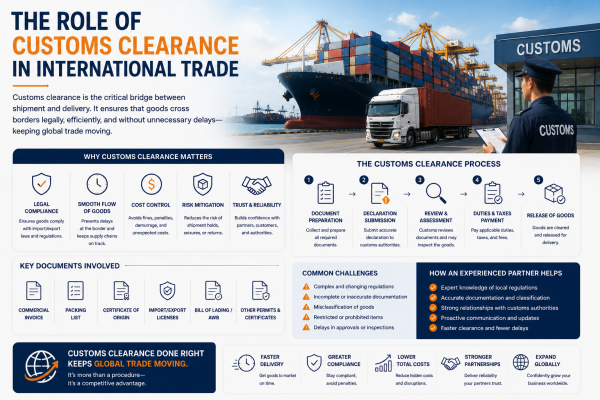
 In international logistics, moving cargo across borders involves much more than transportation. Before goods can legally enter or leave a country, they must go through an essential process known as Customs Clearance.
Although often viewed as an administrative procedure, customs clearance plays a critical role in ensuring shipments move smoothly, comply with regulations, and reach their destination without unnecessary delays.
🛃 What Is Customs Clearance?
Customs clearance is the process of submitting and verifying the required documentation and information so that customs authorities can approve the import or export of goods.
This process may involve:
• Cargo declaration
• Documentation review
• Duty and tax assessment
• Regulatory compliance checks
• Cargo inspection (if required)
Only after customs approval can cargo continue its journey.
📄 Documentation Is the Foundation
Successful customs clearance depends heavily on accurate paperwork.
Common documents include:
• Commercial Invoice
• Packing List
• Bill of Lading (B/L) or Air Waybill (AWB)
• Certificate of Origin (C/O)
• Import and Export Licenses
• Customs Declaration Forms
Even a small discrepancy can result in delays, inspections, or additional costs.
🚢 Customs Clearance Impacts Delivery Timelines
A shipment may arrive at the destination port on schedule, but without customs clearance, it cannot be released for delivery.
Efficient clearance helps businesses:
✔ Reduce cargo delays
✔ Improve delivery reliability
✔ Maintain inventory flow
✔ Meet customer commitments
For time-sensitive shipments, customs efficiency can be just as important as transportation speed.
💰 Avoiding Unexpected Costs
Customs-related issues can lead to:
• Storage charges
• Demurrage and detention fees
• Customs penalties
• Additional inspections
• Delayed deliveries
Proper documentation and compliance help minimize these risks and control overall logistics costs.
🌐 Compliance in Global Trade
Every country has its own customs regulations and import/export requirements.
Businesses must ensure:
• Accurate cargo classification
• Correct HS Codes
• Compliance with local regulations
• Proper declaration of cargo value
Failure to comply can create operational and financial consequences.
🤝 The Value of Customs Expertise
Many businesses work with experienced customs brokers and logistics partners to navigate complex regulatory requirements.
Professional support helps:
• Reduce clearance risks
• Improve documentation accuracy
• Accelerate cargo release
• Ensure regulatory compliance
In international trade, expertise often saves both time and money.
🚀 More Than a Formality
Customs clearance is not simply a paperwork requirement—it is a critical link between transportation and delivery.
A smooth customs process helps businesses maintain supply chain continuity, improve operational efficiency, and strengthen customer satisfaction.
Because in international logistics, cargo may travel thousands of miles across oceans and borders, but it cannot move forward without successful customs clearance.
#KTEnergyGlobal #CustomsClearance #Logistics #SupplyChain #GlobalTrade #ImportExport #FreightForwarding #InternationalShipping #MaritimeLogistics #SupplyChainManagement