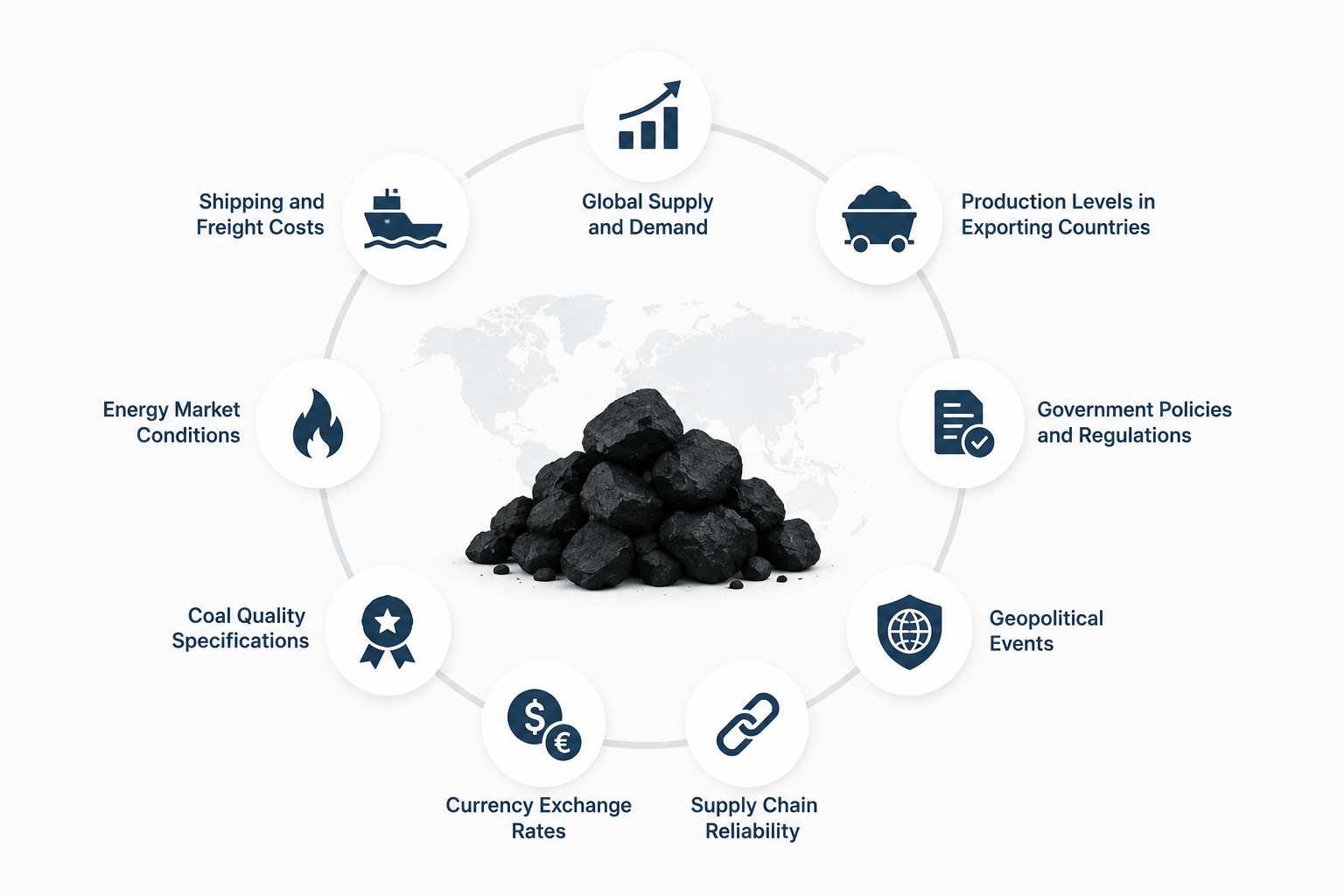
The global thermal coal market continues to evolve in response to changing energy demand, international trade flows, environmental policies, and supply chain developments. While market conditions fluctuate over time, understanding the key trends shaping the industry helps businesses make better procurement decisions, improve operational planning, and strengthen long-term supply strategies.
For industries that depend on thermal coal as a primary energy source, staying informed about market developments is no longer optional—it has become an essential part of effective business management.
Growing Energy Demand Across Emerging Markets
Rapid industrialization and urban development continue to drive electricity consumption across many emerging economies.
Countries throughout Asia, particularly those experiencing strong manufacturing growth, continue to invest in power generation and industrial infrastructure. As a result, thermal coal remains an important fuel for maintaining reliable electricity supply and supporting industrial production.
Although energy diversification continues to expand globally, thermal coal remains a practical solution for many regions where stable baseload power is required.
Supply Chain Resilience Has Become a Priority
Recent global events have highlighted the importance of resilient supply chains.
Weather disruptions, port congestion, transportation constraints, and geopolitical uncertainties have demonstrated how quickly international commodity flows can be affected. Businesses are increasingly placing greater emphasis on supply security rather than focusing solely on commodity pricing.
Reliable logistics, efficient transportation, and proactive planning have become essential components of successful procurement strategies.
Freight Costs Continue to Influence Delivered Prices
Ocean freight remains one of the largest variables affecting the total cost of imported thermal coal.
Freight rates are influenced by factors such as:
- Vessel availability
- Fuel prices
- Seasonal cargo demand
- Port congestion
- International shipping capacity
Even when coal prices remain relatively stable, fluctuations in freight costs can significantly impact the final delivered price for industrial consumers.
Quality Is Becoming More Important
Industrial customers are placing increasing emphasis on consistent coal quality.
Beyond competitive pricing, businesses now prioritize suppliers capable of delivering stable specifications that support efficient combustion, reduce maintenance requirements, and improve operational performance.
Important quality considerations include:
- Calorific Value (CV)
- Moisture Content
- Ash Content
- Sulfur Content
- Particle Size
- Consistency between shipments
Reliable quality contributes directly to production efficiency and long-term cost control.
Sustainability and Environmental Considerations
Environmental regulations continue to influence the global coal industry.
Many countries are implementing stricter emission standards while investing in cleaner technologies and improved combustion efficiency. At the same time, industries requiring dependable baseload energy continue to rely on thermal coal as part of a balanced energy mix.
Businesses are increasingly seeking higher-quality coal that supports improved combustion efficiency and reduced environmental impact.
Digitalization Across the Supply Chain
Technology is playing an increasingly important role in commodity trading and logistics.
Digital documentation, cargo tracking, shipment visibility, and real-time communication allow businesses to better monitor supply chains, improve operational efficiency, and respond more quickly to unexpected disruptions.
Greater transparency throughout the logistics process also helps strengthen coordination between suppliers, shipping companies, ports, and industrial customers.
Long-Term Partnerships Over Short-Term Transactions
Another noticeable trend is the growing preference for long-term business relationships.
Rather than purchasing solely based on price, many industrial buyers now value suppliers that can consistently provide:
- Reliable supply
- Stable product quality
- Efficient logistics
- Professional communication
- Operational support
- Long-term commitment
Strong partnerships help businesses reduce procurement risks while improving supply chain resilience.
Looking Ahead
The global thermal coal market will continue to evolve alongside changes in energy demand, industrial growth, environmental policies, and international trade. While market conditions may fluctuate, the need for reliable energy supply remains essential for many industries worldwide.
Businesses that stay informed about market trends and work with dependable supply partners will be better positioned to manage uncertainty, optimize operations, and achieve sustainable long-term growth.
KT Energy Global’s Perspective
At KT Energy Global, we continuously monitor developments across the global thermal coal market to better understand changing industry trends, logistics conditions, and customer requirements. By combining reliable thermal coal solutions with efficient logistics coordination and professional service, we remain committed to supporting industrial customers with dependable supply chain solutions in an increasingly dynamic global market.