In the global bulk commodity industry, supply chain reliability is just as important as product quality and pricing. From sourcing and transportation to port operations and final delivery, every stage of the supply chain presents potential risks that can impact business performance.
For companies involved in thermal coal and other bulk commodities, effective risk management is essential for maintaining stable operations, protecting profitability, and ensuring uninterrupted supply.
Understanding Supply Chain Risks
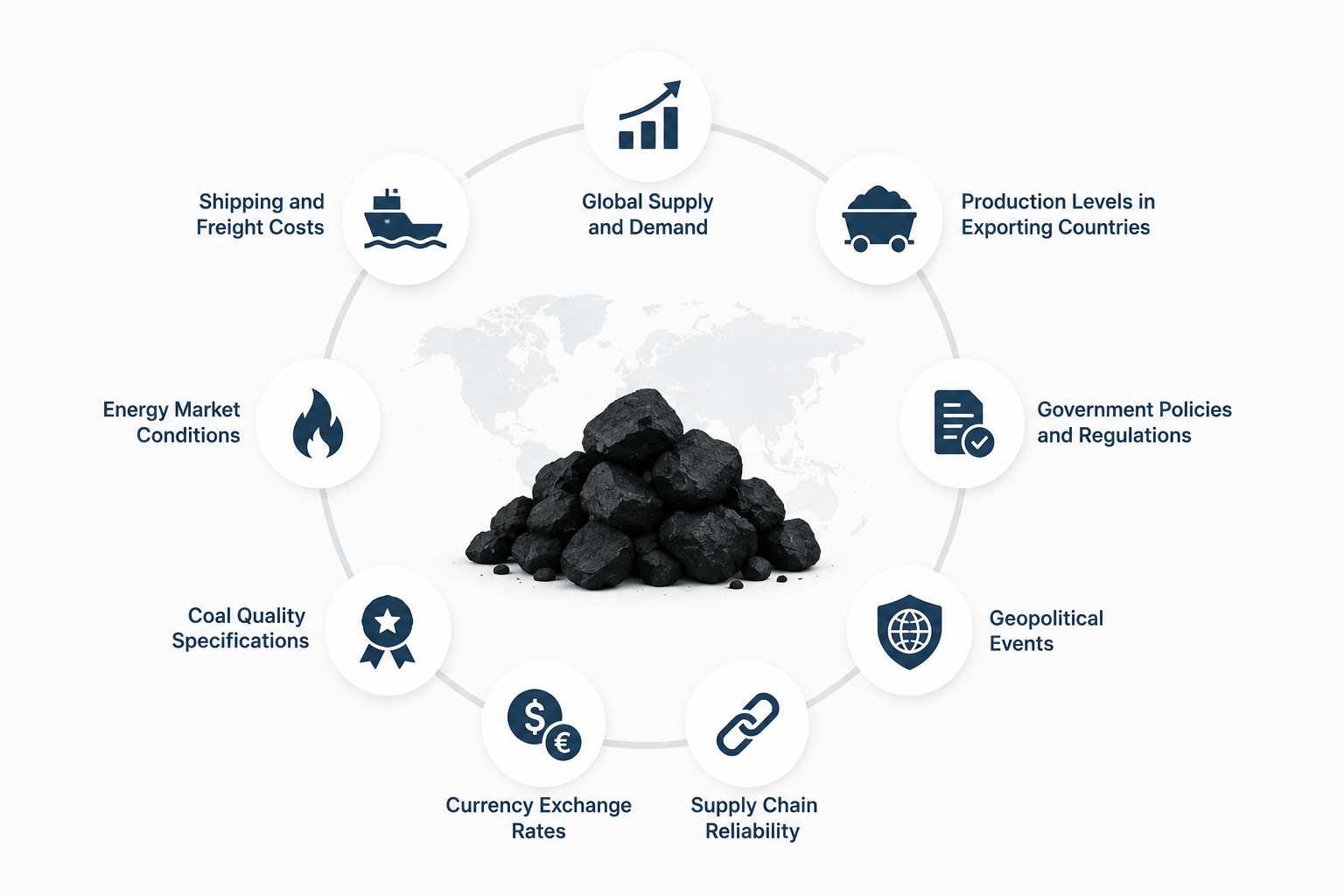
Bulk commodity trading involves multiple stakeholders operating across different countries, transportation networks, and regulatory environments. As a result, supply chains can be affected by a wide range of external factors.
Common risks include:
- Shipping delays
- Port congestion
- Extreme weather conditions
- Changes in government regulations
- Geopolitical events
- Mining production disruptions
- Freight market volatility
- Documentation or customs delays
While many of these factors are beyond direct control, businesses can significantly reduce their impact through careful planning and proactive supply chain management.
Diversifying Supply Sources
Relying on a single supplier or production region increases exposure to unexpected disruptions.
Developing relationships with multiple reliable supply sources allows businesses to respond more effectively when market conditions change. A diversified sourcing strategy improves flexibility and helps maintain business continuity during periods of supply uncertainty.
Strengthening Logistics Planning
Efficient logistics are fundamental to a resilient supply chain.
Coordinating vessel schedules, transportation, port operations, cargo handling, and documentation in advance helps reduce delays and improve shipment reliability.
Businesses that invest in proactive logistics planning are better prepared to manage unexpected operational challenges while maintaining consistent delivery performance.
Maintaining Quality Consistency
Supply chain reliability is not limited to timely delivery. Product consistency is equally important.
Receiving coal that meets agreed technical specifications from shipment to shipment helps manufacturers maintain stable production, improve fuel efficiency, and reduce equipment maintenance.
Reliable quality control contributes directly to operational stability and customer confidence.
Monitoring Market Conditions
Commodity markets change rapidly.
Monitoring developments such as freight rates, export policies, energy demand, weather conditions, and geopolitical events allows businesses to anticipate potential disruptions before they affect operations.
Market intelligence supports more informed procurement decisions and strengthens long-term planning.
Building Long-Term Partnerships
Strong business relationships are one of the most effective ways to reduce supply chain risk.
Working with dependable partners who understand operational requirements improves communication, increases flexibility, and supports faster problem-solving when unexpected situations arise.
Long-term partnerships also encourage greater transparency and stronger coordination throughout the supply chain.
Improving Supply Chain Visibility
Access to timely operational information enables businesses to make faster and better-informed decisions.
Tracking shipment progress, monitoring transportation schedules, and maintaining regular communication with logistics partners improve visibility across the supply chain and help identify potential issues before they become major disruptions.
Greater transparency contributes to more reliable planning and stronger operational control.
Preparing for Unexpected Disruptions
Although risks cannot always be prevented, businesses can improve resilience by developing contingency plans.
Practical measures may include:
- Maintaining appropriate inventory levels
- Diversifying transportation options
- Identifying alternative loading ports
- Establishing multiple logistics partners
- Regularly reviewing procurement strategies
Prepared organizations recover more quickly when disruptions occur and are better positioned to maintain stable operations.
The Value of an Integrated Supply Chain
A successful bulk commodity supply chain depends on the seamless coordination of sourcing, logistics, quality management, documentation, and delivery.
Rather than viewing each stage independently, businesses benefit from managing the supply chain as an integrated system where every component supports operational efficiency and long-term reliability.
KT Energy Global’s Commitment
At KT Energy Global, we understand the importance of building resilient supply chains in today’s dynamic global market. Through dependable thermal coal solutions, efficient logistics coordination, and a commitment to operational excellence, we help industrial customers reduce supply chain risks and strengthen business continuity.
By focusing on reliability, transparency, and long-term partnerships, we strive to deliver practical solutions that support efficient operations and sustainable growth in the global bulk commodity industry.