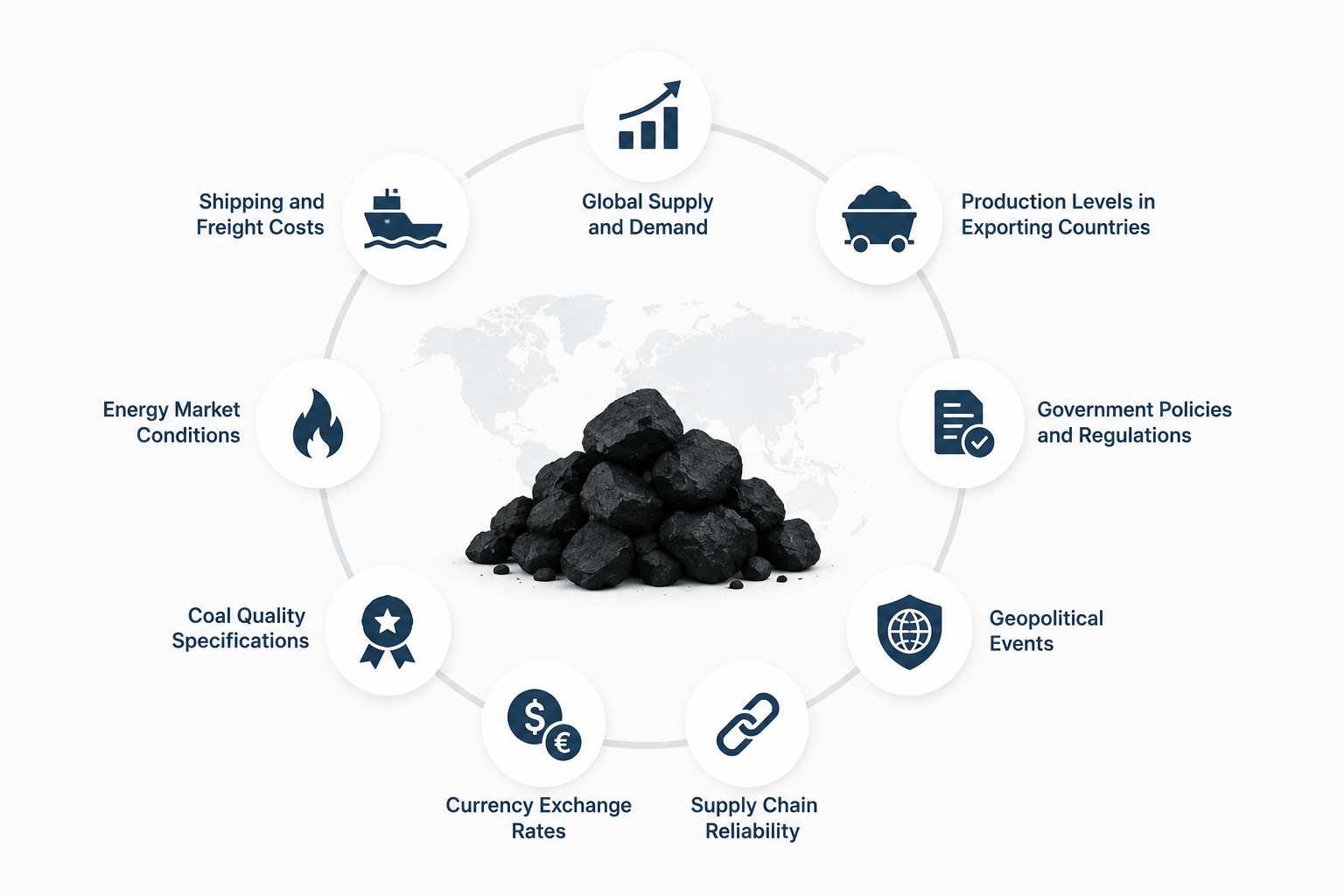
Selecting the right thermal coal is about far more than simply purchasing fuel. For industrial users, coal quality has a direct impact on energy efficiency, production costs, equipment performance, and overall operational reliability. Understanding key coal specifications enables businesses to optimize fuel consumption, improve productivity, and maintain consistent manufacturing performance.
Different industries have different energy requirements. Power plants, cement manufacturers, brick producers, steel mills, and other industrial facilities often require specific coal characteristics to match their combustion systems and production processes. Choosing the appropriate coal specification helps maximize operational efficiency while minimizing unnecessary costs.
Calorific Value (CV)
Calorific Value (CV) is one of the most important indicators of coal quality. It measures the amount of heat released during combustion and is typically expressed in kilocalories per kilogram (kcal/kg).
Coal with a higher calorific value produces more energy from the same quantity of fuel, allowing industrial facilities to improve efficiency and reduce fuel consumption. Selecting the appropriate CV depends on the specific requirements of each application and combustion system.
Moisture Content
Moisture content refers to the amount of water present in the coal.
High moisture levels reduce the effective heating value because part of the combustion energy is consumed to evaporate the water. Lower moisture content generally improves combustion efficiency, transportation economics, and storage performance.
Maintaining appropriate moisture levels can help reduce operational costs while improving fuel performance.
Ash Content
Ash is the non-combustible residue remaining after coal is burned.
Coal with excessive ash content generates more waste, increases maintenance requirements, and may reduce boiler efficiency. Lower ash content often contributes to cleaner combustion, reduced equipment wear, and improved operational reliability.
Industries that operate continuously often pay close attention to ash specifications to minimize downtime and maintenance expenses.
Sulfur Content
Sulfur is a naturally occurring element found in coal.
Higher sulfur levels may increase emissions during combustion and require additional environmental control systems depending on local regulations. Selecting coal with sulfur content that matches operational and regulatory requirements helps businesses maintain compliance while supporting efficient production.
Volatile Matter
Volatile matter represents the gases released when coal is heated before combustion is fully established.
This characteristic influences ignition behavior, flame stability, and combustion efficiency. Different industrial applications require different volatile matter ranges depending on furnace design and production requirements.
Particle Size
Coal size is another important operational consideration.
Proper sizing improves handling, storage, transportation, and combustion performance. Uniform particle size allows more consistent feeding into combustion systems and contributes to stable operating conditions.
Why Quality Consistency Matters
Beyond individual specifications, consistency from shipment to shipment is equally important.
Variations in coal quality can affect combustion efficiency, increase fuel consumption, alter production output, and create unexpected operational challenges. Reliable quality control helps businesses maintain predictable production performance while reducing operational risks.
Many industrial customers therefore prioritize suppliers capable of delivering consistent specifications over long-term supply agreements.
More Than Just Fuel
For industrial operations, thermal coal should be viewed not simply as a commodity but as an essential component of production efficiency.
Selecting the appropriate coal specification can improve energy performance, reduce maintenance costs, optimize equipment operation, and contribute to more stable manufacturing processes. Understanding these technical characteristics enables businesses to make informed purchasing decisions based on operational requirements rather than price alone.
KT Energy Global’s Commitment
At KT Energy Global, we understand that every industry has unique fuel requirements. We are committed to supporting our customers with reliable thermal coal solutions that emphasize consistent quality, dependable supply, and efficient logistics coordination.
By focusing on long-term partnerships and professional service, we strive to help businesses improve operational efficiency and maintain reliable energy performance in an increasingly competitive global market.