In today’s rapidly changing business environment, market disruptions have become more frequent and unpredictable. From fluctuating freight rates and supply shortages to geopolitical tensions and shifting customer demand, businesses are facing increasing pressure to adapt quickly.
In this landscape, supply chain flexibility has become one of the most important factors for maintaining operational stability and long-term competitiveness.
🔄 What Is a Flexible Supply Chain?
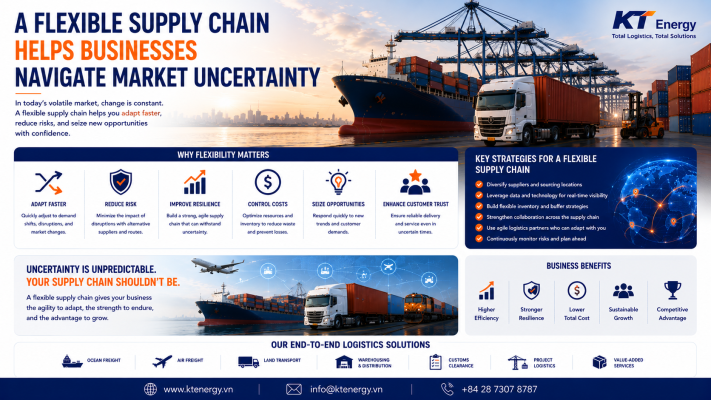
A flexible supply chain is the ability to adjust sourcing, transportation, inventory, and logistics strategies in response to changing market conditions without causing major disruptions to operations.
Rather than relying on a single supplier, route, or logistics solution, businesses create multiple options that allow them to respond more effectively when challenges arise.
📈 Faster Response to Market Changes
Markets can shift rapidly due to economic conditions, customer demand, or global events.
A flexible supply chain helps businesses:
• React quickly to demand fluctuations
• Adjust production and inventory plans
• Respond to unexpected disruptions
• Capture new market opportunities faster
🚢 Reduced Transportation Risks
Transportation disruptions can occur at any stage of the logistics process.
Flexible logistics networks allow businesses to:
• Utilize alternative shipping routes
• Work with multiple carriers
• Explore multimodal transportation options
• Minimize delays caused by congestion or capacity shortages
📦 Better Inventory Management
Companies with adaptable supply chains can manage inventory more efficiently by:
• Maintaining strategic safety stock
• Improving demand forecasting
• Reducing stockout risks
• Optimizing warehouse operations
This helps balance customer service levels and operational costs.
🌐 Stronger Supply Chain Resilience
A resilient supply chain is one that can absorb disruptions and continue operating effectively.
Flexible businesses are often better prepared for:
• Supply shortages
• Freight rate volatility
• Regulatory changes
• Geopolitical uncertainties
• Natural disasters and unexpected events
🤝 Strong Partnerships Create Flexibility
Reliable suppliers, logistics providers, and transportation partners play a critical role in maintaining supply chain agility.
Long-term partnerships help businesses:
• Access alternative solutions quickly
• Improve communication and visibility
• Enhance operational coordination
• Reduce response times during disruptions
🚀 Flexibility Is a Competitive Advantage
In today’s global economy, the ability to adapt is often more valuable than the ability to predict.
Companies that invest in flexible supply chains can:
✔ Maintain business continuity
✔ Improve customer satisfaction
✔ Reduce operational risks
✔ Optimize logistics performance
✔ Strengthen long-term competitiveness
As market conditions continue to evolve, supply chain flexibility is no longer just a risk-management strategy—it has become a key driver of sustainable business growth.
#KTEnergyGlobal #SupplyChain #Logistics #SupplyChainResilience #GlobalTrade #BusinessGrowth #FreightForwarding #MaritimeLogistics #InternationalLogistics #SupplyChainManagement