International shipping plays a vital role in global trade, but it also involves various operational challenges that can impact costs, delivery schedules, and overall supply chain performance.
For importers, exporters, and logistics providers, understanding potential risks is the first step toward building a more resilient and efficient supply chain.
⚠️ Common Risks in International Transportation
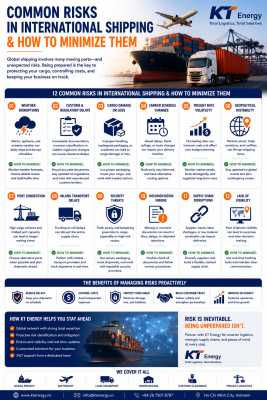
🚢 Shipment Delays
Delays can occur due to port congestion, vessel schedule changes, customs inspections, weather disruptions, or transportation bottlenecks.
How to minimize:
• Plan shipments in advance
• Book cargo space early during peak seasons
• Maintain flexible transportation options
• Work with experienced logistics partners
📄 Documentation Errors
Incorrect or incomplete shipping documents can lead to customs delays, penalties, additional costs, and cargo holds.
How to minimize:
• Verify all shipping documents carefully
• Maintain accurate cargo information
• Ensure compliance with destination-country regulations
• Utilize professional customs and documentation support
📦 Cargo Damage or Loss
Improper packaging, handling errors, accidents, or adverse weather conditions can result in damaged or lost cargo.
How to minimize:
• Use proper export-grade packaging
• Follow cargo handling standards
• Select reliable carriers and logistics providers
• Consider cargo insurance coverage
💰 Freight Rate Volatility
Ocean and air freight rates can fluctuate significantly due to market demand, fuel costs, carrier capacity, and geopolitical events.
How to minimize:
• Monitor freight market trends
• Secure long-term logistics partnerships
• Plan shipments proactively
• Diversify transportation strategies when possible
🌐 Supply Chain Disruptions
Events such as labor shortages, geopolitical tensions, natural disasters, or infrastructure issues can affect global cargo movement.
How to minimize:
• Build contingency plans
• Diversify suppliers and logistics routes
• Maintain supply chain visibility
• Strengthen risk management processes
⚖️ Regulatory & Compliance Issues
Changing customs regulations, trade policies, and import/export requirements can create unexpected operational challenges.
How to minimize:
• Stay informed about regulatory changes
• Work with knowledgeable logistics and customs experts
• Conduct regular compliance reviews
✅ Proactive Risk Management Creates Stronger Supply Chains
While international shipping risks cannot be completely eliminated, businesses that focus on planning, visibility, communication, and logistics expertise can significantly reduce disruptions and maintain more stable operations.
In today’s global market, successful logistics is not only about moving cargo—it is also about managing risks before they become costly problems.
Companies that invest in supply chain resilience and reliable logistics partnerships will be better positioned to protect operations, control costs, and support long-term growth.
#KTEnergyGlobal #Logistics #InternationalShipping #SupplyChain #RiskManagement #GlobalTrade #FreightForwarding #MaritimeLogistics #FreightSolutions #ImportExport