As global trade volumes increase during peak shipping seasons, container shortages often become a major challenge for importers, exporters, and logistics providers. Limited equipment availability can lead to higher freight rates, booking difficulties, shipment delays, and increased supply chain risks.
For businesses involved in international trade, proactive preparation is essential to minimize disruptions and maintain smooth operations.
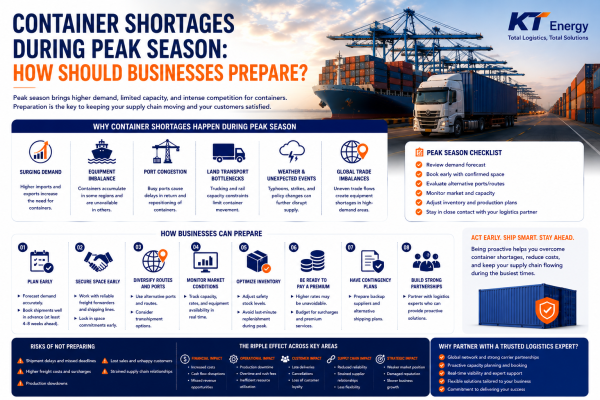
🚢 Why Do Container Shortages Happen?
Container shortages are typically driven by several factors:
• Increased shipping demand during peak season
• Equipment imbalances across global trade routes
• Port congestion and longer container turnaround times
• Vessel schedule disruptions
• Sudden changes in trade patterns and market demand
When demand exceeds available equipment, securing containers becomes more difficult and costly.
📅 Book Shipments Earlier
One of the most effective strategies is early planning.
Benefits of early booking:
• Better access to container equipment
• More shipping schedule options
• Lower risk of last-minute surcharges
• Improved supply chain predictability
Businesses that wait until the last minute often face limited availability and higher logistics costs.
🌐 Diversify Transportation Options
Relying on a single shipping route or carrier can increase vulnerability during equipment shortages.
Companies should consider:
• Alternative ports of loading
• Multiple carrier options
• Multimodal transportation solutions
• Flexible routing strategies
This helps reduce operational risk when capacity becomes constrained.
🤝 Build Strong Logistics Partnerships
Reliable freight forwarders and logistics providers often have better access to carrier networks and equipment resources.
A strong logistics partner can help:
• Secure container allocations
• Monitor market conditions
• Provide alternative shipping solutions
• Respond quickly to operational disruptions
📦 Improve Inventory Planning
Businesses should align inventory management with logistics planning.
This may include:
• Maintaining safety stock levels
• Forecasting seasonal demand more accurately
• Reducing dependency on urgent shipments
• Improving warehouse coordination
Better inventory planning can help absorb transportation delays when container availability becomes limited.
📊 Monitor Market Trends Closely
Freight markets can change rapidly during peak seasons.
Tracking market developments allows businesses to:
• Anticipate shortages earlier
• Adjust procurement schedules
• Optimize transportation decisions
• Improve cost control and budgeting
✅ Preparation Creates Competitive Advantage
Container shortages are a recurring challenge in global logistics, especially during periods of strong trade activity. While businesses cannot control market conditions, they can control how well they prepare.
Companies that plan ahead, maintain logistics flexibility, and build strong supply chain partnerships will be better positioned to manage capacity constraints, reduce risks, and maintain reliable cargo movement throughout the peak season.
#KTEnergyGlobal #Logistics #ContainerShortage #SupplyChain #GlobalTrade #FreightForwarding #PeakSeason #MaritimeLogistics #InternationalShipping #FreightSolutions