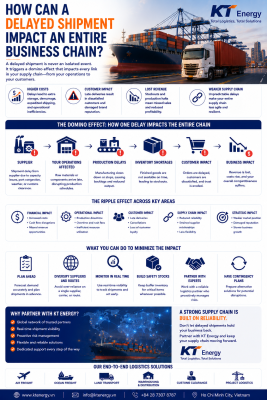
In global trade, a delayed shipment is often viewed as a transportation issue. However, in reality, the impact can extend far beyond logistics and affect multiple areas of a business operation.
Today’s supply chains are highly interconnected. When one shipment falls behind schedule, the consequences can ripple throughout production, inventory management, customer commitments, and financial performance.
🚨 Production Disruptions
For manufacturers, delayed raw materials or components can interrupt production schedules and reduce operational efficiency.
Potential impacts:
• Production downtime
• Missed manufacturing targets
• Increased labor and operational costs
• Delayed product launches
📦 Inventory Challenges
When shipments arrive later than expected, businesses may struggle to maintain optimal inventory levels.
Possible consequences:
• Stock shortages
• Emergency replenishment costs
• Reduced warehouse planning efficiency
• Lost sales opportunities
🤝 Customer Satisfaction Risks
Delivery reliability is a key factor in customer trust.
A delayed shipment can lead to:
• Missed delivery commitments
• Customer complaints
• Reduced service levels
• Long-term reputational damage
💰 Increased Operational Costs
Unexpected delays often create additional expenses throughout the supply chain.
Examples include:
• Demurrage and storage fees
• Expedited transportation costs
• Overtime labor expenses
• Production rescheduling costs
🌐 Supply Chain Disruptions
One delayed shipment can create a domino effect across suppliers, distributors, warehouses, and customers.
This may result in:
• Scheduling conflicts
• Transportation bottlenecks
• Resource allocation issues
• Reduced supply chain efficiency
📈 Financial Performance Impact
Supply chain delays can directly affect revenue, profitability, and cash flow.
Businesses may face:
• Delayed customer payments
• Lost sales opportunities
• Higher operating costs
• Reduced profit margins
✅ Why Proactive Logistics Planning Matters
Successful businesses recognize that logistics is not simply about transportation—it is about maintaining the flow of the entire business operation.
Companies can reduce the impact of delays by:
• Planning shipments in advance
• Maintaining supply chain visibility
• Diversifying transportation options
• Working with reliable logistics partners
• Building contingency plans for disruptions
🌍 Logistics Is a Business Continuity Strategy
In today’s fast-moving global economy, a single delayed shipment can affect production, inventory, customer relationships, and financial performance.
Businesses that invest in resilient supply chains and proactive logistics management are better equipped to minimize disruptions and maintain long-term competitiveness.
#KTEnergyGlobal #Logistics #SupplyChain #GlobalTrade #FreightForwarding #BusinessContinuity #RiskManagement #MaritimeLogistics #InternationalLogistics #SupplyChainResilience